
Habla Español:
Call Now
Cremation Consultants Available 24/7
Call Now
Cremation Consultants Available 24/7
Legacy of Billy Graham

Few have left as profound an impact as Billy Graham in the realm of spiritual leaders.
With his unwavering faith and incredible ability to reach the hearts of millions, Graham’s legacy continues to touch lives even after his passing.
But what were his thoughts on cremation? In this article, we explore the unforgettable legacy of Billy Graham and delve into his perspective on this unconventional method of laying the body to rest.
Throughout his life, Graham preached a message of hope and salvation, reminding his followers of the eternal life that awaits believers. This captivating article delves into Graham’s views on cremation, addressing the spiritual and practical aspects surrounding this controversial topic. By examining Graham’s teachings and personal beliefs, we gain insight into his stance on cremation and its implications for our faith.
Join us on this insightful journey as we uncover the thoughts and convictions of one of our time’s most influential spiritual figures. Discover the impact of Graham’s ideology and explore how it could shape your perspectives on cremation, death, and the legacy we leave behind.
Understanding Cremation and Its Significance

Cremation reduces the human body to its essential elements by applying intense heat and flame. It has been practiced for centuries across various cultures and religions, and its significance extends beyond the physical act of disposing of the deceased. Cremation is often viewed as a symbolic gesture, representing the transition from the physical to the spiritual realm. The ashes that remain after the cremation process are considered sacred and are typically preserved or scattered in a meaningful location.
The decision to opt for cremation rather than traditional burial is a highly personal one, influenced by a range of factors, including cultural, religious, and practical considerations. Some individuals may choose cremation as a more environmentally friendly alternative to traditional burial, as it often requires less land and resources. Others may view cremation as a more cost-effective option, particularly where land for burials is scarce or expensive.
Regardless of the motivations, cremation has gained increasing acceptance and popularity in recent years, challenging the long-held burial traditions.
This shift in attitudes towards cremation has sparked a deeper examination of its spiritual, emotional, and practical implications, making it a topic of great interest and discussion within faith, culture, and personal beliefs.
Billy Graham’s Thoughts on Cremation
As one of the most influential evangelical Christian leaders of the 20th century, Billy Graham’s views on cremation were closely scrutinized and often sought after by his followers. Graham, known for his unwavering faith and his ability to connect with people from all walks of life, had a unique perspective on this often controversial topic.
Throughout his decades-long ministry, Graham never explicitly condemned the practice of cremation, recognizing that it was a personal choice that should be respected. However, he did express a preference for traditional burial, citing biblical references to the importance of honoring the physical body and the sacredness of the human form.
In his teachings, Graham emphasized the belief that the body is a temple of the Holy Spirit and should be treated with reverence and care, even in death. He often referenced the biblical accounts of the patriarchs and prophets being buried respectfully as a testament to the significance of the physical remains. This belief, coupled with his deep-rooted respect for tradition, led Graham to advocate for a more traditional approach to end-of-life rituals, including the preference for burial over cremation.
The Historical Context of Cremation
The practice of cremation has a long and varied history, dating back thousands of years across different civilizations and cultures. In ancient times, cremation was often associated with the belief in the purification of the soul, as the intense heat was seen as a means of releasing the spirit from the physical body.
Throughout history, the prevalence and acceptance of cremation have ebbed and flowed, influenced by a range of cultural, religious, and sociopolitical factors. For example, in ancient Greece and Rome, cremation was a widely accepted practice, with the deceased’s ashes often being preserved in urns or scattered in sacred locations.
In contrast, the rise of Christianity in the Western world led to a decline in the popularity of cremation, as the religion emphasized the importance of the physical body and its eventual resurrection. This shift was further reinforced by the Catholic Church’s formal prohibition of cremation in the 19th century, which remained in place until the mid-20th century.
Cremation in Different Cultures and Religions
The practice of cremation is not limited to any single culture or religion but has been embraced and adapted by diverse belief systems and traditions. Each culture and faith has its unique perspective on the significance and rituals surrounding cremation, reflecting the rich tapestry of human experience and spirituality.
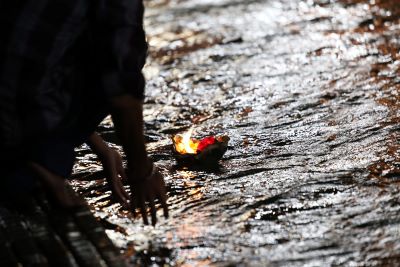
In Hinduism, for example, cremation is a deeply ingrained and revered practice, with the funeral pyre serving as a symbolic representation of the transition from the physical to the spiritual realm. The ashes are then scattered in sacred rivers or kept in special urns to honor the deceased and facilitate their journey to the afterlife.
Similarly, in Buddhism, cremation is a widely accepted and even preferred method of disposition, as it is seen as a means of releasing the spirit from the physical constraints of the body. The ashes are often preserved and venerated as sacred relics, with specific rituals and ceremonies surrounding their placement and preservation.
On the other hand, in the Abrahamic faiths of Judaism, Christianity, and Islam, traditional burial has long been the preferred method of disposition, with cremation often being viewed as a less desirable or even unacceptable practice. However, in recent decades, there has been a gradual shift in attitudes, with some adherents to these faiths embracing cremation as a viable and even meaningful option.
The Impact of Billy Graham’s Views on Cremation
Billy Graham’s stance on cremation, while not as prominent or widely discussed as some of his other theological positions, nonetheless significantly impacted the perspectives of his vast and devoted following. As a revered and respected spiritual leader, Graham’s views carried considerable weight, and his preference for traditional burial over cremation influenced the beliefs and practices of many of his followers.
Graham’s emphasis on the sacredness of the human body and his reverence for biblical traditions resonated deeply with his audience, many of whom shared his deep-rooted respect for the deceased’s physical remains. His teachings on the importance of honoring the body, even in death, reinforced the notion that cremation, while not inherently sinful, was not the ideal or preferred method of disposition.
This impact was particularly evident in the evangelical Christian community, where Graham’s influence was most pronounced. Many of his followers, inspired by his teachings and his deep respect for traditional burial practices, opted for conventional funerals and interments, often eschewing the option of cremation in favor of a more conventional approach to honoring the deceased.
Moreover, Graham’s views on cremation also had a broader impact on the cultural and societal perceptions surrounding this practice. As one of the most prominent and respected Christian leaders of his time, his endorsement of traditional burial helped to perpetuate the stigma and discomfort that some individuals and communities felt towards cremation, particularly within the context of religious and spiritual beliefs.
Modern Perspectives on Cremation
In recent decades, the landscape surrounding cremation has undergone a significant transformation, with attitudes and perceptions shifting in response to various social, economic, and environmental factors. As the world has become increasingly globalized and diverse, the once-taboo practice of cremation has gained greater acceptance and even preference among many individuals and communities.
One of the key drivers of this shift has been the growing emphasis on personal choice and individualization in end-of-life planning. As people have become more open to exploring alternative options beyond the traditional burial, cremation has emerged as a viable and even desirable alternative, offering a sense of control and customization over the final disposition of the body.
Furthermore, the rising costs of traditional burial, coupled with the scarcity of available land for cemeteries in many urban areas, have contributed to the increased popularity of cremation. Cremation is often seen as a more cost-effective and practical solution, particularly for those with limited financial resources or who are seeking a more eco-friendly approach to honoring the deceased.
Additionally, the growing diversity of religious and cultural beliefs has led to a more inclusive and accepting attitude towards cremation. As people of different faiths and backgrounds come together, the once-rigid boundaries surrounding acceptable funeral practices have begun to blur, allowing for a more pluralistic and open-minded approach to end-of-life rituals.
The Evolving Attitudes Towards Cremation
As the world continues to evolve and change, the attitudes and perceptions surrounding cremation have also undergone a significant transformation. While the legacy of Billy Graham and the traditional burial practices he championed remain influential, there is a growing acceptance and even preference for cremation among diverse individuals and communities.
This shift in attitudes can be attributed to various factors, including the increasing emphasis on personal choice, the changing demographic and cultural landscape, and the practical and environmental considerations that have made cremation a more appealing option for many.
One of the most notable trends in the evolving attitudes towards cremation is the growing acceptance and even preference for it among younger generations. As millennials and Gen Z individuals navigate the end-of-life planning process, they have shown a greater openness to exploring alternative options, including cremation, that align with their values and preferences.
Furthermore, the increasing diversity of religious and cultural beliefs has also contributed to a more inclusive and accepting attitude towards cremation. As people of different faiths and backgrounds come together, the once-rigid boundaries surrounding acceptable funeral practices have begun to blur, allowing for a more pluralistic and open-minded approach to end-of-life rituals.
Conclusion: Reflecting on Billy Graham’s Enduring Legacy and the Ongoing Discussion on Cremation
As we reflect on the unforgettable legacy of Billy Graham and his profound impact on the spiritual lives of millions, it is clear that his views on cremation, while not as widely discussed as some of his other theological positions, have nonetheless left a lasting impression on the way many individuals and communities approach the end-of-life rituals and decisions.
Graham’s unwavering commitment to the sacredness of the human body and his reverence for traditional burial practices have resonated deeply with his followers, particularly within the evangelical Christian community. His teachings have helped preserve the traditional funeral practices and the respect for the deceased’s physical remains that he so strongly advocated for throughout his ministry.
However, as the world has become increasingly diverse and pluralistic, the attitudes and perceptions surrounding cremation have undergone a significant transformation. The growing emphasis on personal choice, the practical and environmental considerations, and the changing demographic landscape have all contributed to a greater acceptance and even preference for cremation among a wide range of individuals and communities.
As the discussion on cremation continues to evolve, it is essential to recognize the enduring impact of Billy Graham’s legacy and his profound influence on how many people approach end-of-life rituals and decisions. At the same time, it is crucial to acknowledge the shifting attitudes and the need for a more inclusive and open-minded approach to this deeply personal and complex topic.

Ultimately, the legacy of Billy Graham and the ongoing discussion on cremation serves as a reminder of the profound and multifaceted nature of the human experience and the importance of respecting the diverse perspectives and beliefs that shape our understanding of life, death, and the sacred rituals that mark our passage through this world.
10050 Spanish Isles Blvd, Suite E-10
Boca Raton, FL 33498


© 2023 Sunshine Cremation Services LLC. ALL RIGHTS RESERVED. Privacy Notice.
All Funeral Services will be provided by either Sunshine Cremation Services or its parent company, Kronish, Sunshine & Co., a licensed funeral establishment. This website is for informational purposes only. No funeral services are being offered or sold herein.